Approach Choose how Juanita can reward herself when she successfully handles any of the determined triggers without cigarette smoking. Another example of preparing stimulus control involves Angie, who stopped cigarette smoking marijuana as soon as she discovered she was unexpectedly pregnant. why is group therapy the most effective treatment for addiction. She has chosen to keep the baby, however the brand-new stresses of her changing circumstances make her wish to indulge a familiar habit of listening to music to help her unwind.
Angie informs her therapist that a current attempt to play these tunes was anything however relaxing given that she found herself preoccupied with cravings to get high. The therapist recommended conversation of other strategies Angie might utilize to control this stimulus and manage her stress, maybe by choosing other music or other activities.
Her therapist discussed that their strategy could include future factor to consider of reintroducing the music once the new routine of avoiding smoking cigarettes was more firmly established. In other words, controlling the stimulus up until its connection to the discovered action has been extinguished might eventually lead to the possibility of increasing exposure to the neutered stimulus; in this case, Angie's cherished music.
Even when the person has actually reached the action phase of change, unrealistic expectations and worries about the pace of success are most likely. The therapist can use the continuous procedure of preparation treatment to prepare the customer to anticipate ups and downs, to depend on the assistance of the therapist in discovering from both successes and failures, and to keep faith and hope in ultimate progress and increasing efficacy.
How How Much Is Alcohol Addiction Treatment can Save You Time, Stress, and Money.
From an operant conditioning perspective, substance use recurs due to the fact that of the strongly reinforcing residential or commercial properties of the http://milousfb946.image-perth.org/h1-style-clear-both-id-content-section-0-the-7-second-trick-for-what-does-opioid-addiction-treatment-consist-of-h1 habits (detailed in Chapter 4 of Glidden-Tracey, 2005). Treatment in the action phase of modification can use operant learning concepts Substance Abuse Facility by preparing methods to customize the patterns of reinforcement for the customer's habits. According to Prochaska and Norcross (1994 ), to the level that the consequences of habits are under control of either member of the therapy dyad, the approach of contingency management involves identifying and using significant rewards for habits that are incompatible with compound abuse.
As behavioral therapists have often kept in mind, the nature of reinforcement is tricky since the effectiveness of a benefit varies throughout individuals, and since the factors strengthening an individual's habits are not always obvious (Cahoon & Cosby, 1972). Practical analysis is recommended in behavioral therapies to tease out the reinforcement systems specific to individual customers.
The pleasure and relief that features the effect of the chemical on brain functions is often boosted by social reinforcers. What this means in preparing treatment for addicting conditions is that efforts to customize the contingencies of behavior, starting with a practical analysis of support patterns, will work much better if the therapist acknowledges the advantages as well as the costs the customer has actually sustained from compound usage (Sobell, Sobell, & Sheahan, 1976; Tucker, Donavan, & Marlatt, 1999).
Consistent with inspirational interviewing principles (Miller & Rollnick, 2002), the therapist needs to balance this compassion with consciousness-raising about the destructive consequences of continuing usage, hence establishing disparity. This compassion and inconsistency are essential in planning treatment in the action phases of modification for 2 reasons. Initially, the customer's increased awareness of such strong, blended inspirations for and against changing habits assists to anticipate the troubles related to acting that accomplishes the criterion objective.
The Single Strategy To Use For How To Explain Treatment Plan For Addiction
Second, the therapist's stance of empathy with discrepancy communicates the therapist's appreciation of the salience of reinforcers taking on the customer's attempts to alter. The therapist's understanding of the client's completing inspirations helps the therapists "roll with resistance." A client who senses that the therapist shares the difficulty of the customer's battle to maintain action tends to feel supported rather than criticized.
Such experiences also contribute to boosts in the client's self-efficacy for change. The research literature on treatments of substance use disorders contains numerous studies of contingency management techniques where the benefits for client behavior constant with treatment objectives were under the therapist's control (e - how does treatment and recovery for a teen help overcome addiction.g., Budney, Higgins, Radonovich, & Novey, 2000; Carroll, Sinha, Nich, Babuscio, & Rounsaville, 2002; Higgins, 1999; Higgins, Wong, Badger, Ogden, Haug, & Dantona, 2000; Tidey, O'Neill, & Higgins, 2002).
The coupons can later on be exchanged for desirable products or opportunities. Applications to outpatient treatment have actually also been successfully made use of. Proof indicates that voucher systems are generally effective in minimizing compound use throughout treatment, but that these gains tend to drop off fairly right after treatment ends (Epstein, Hawkins, Covi, Umbricht, & Preston, 2003; Rawson, et al., 2002).
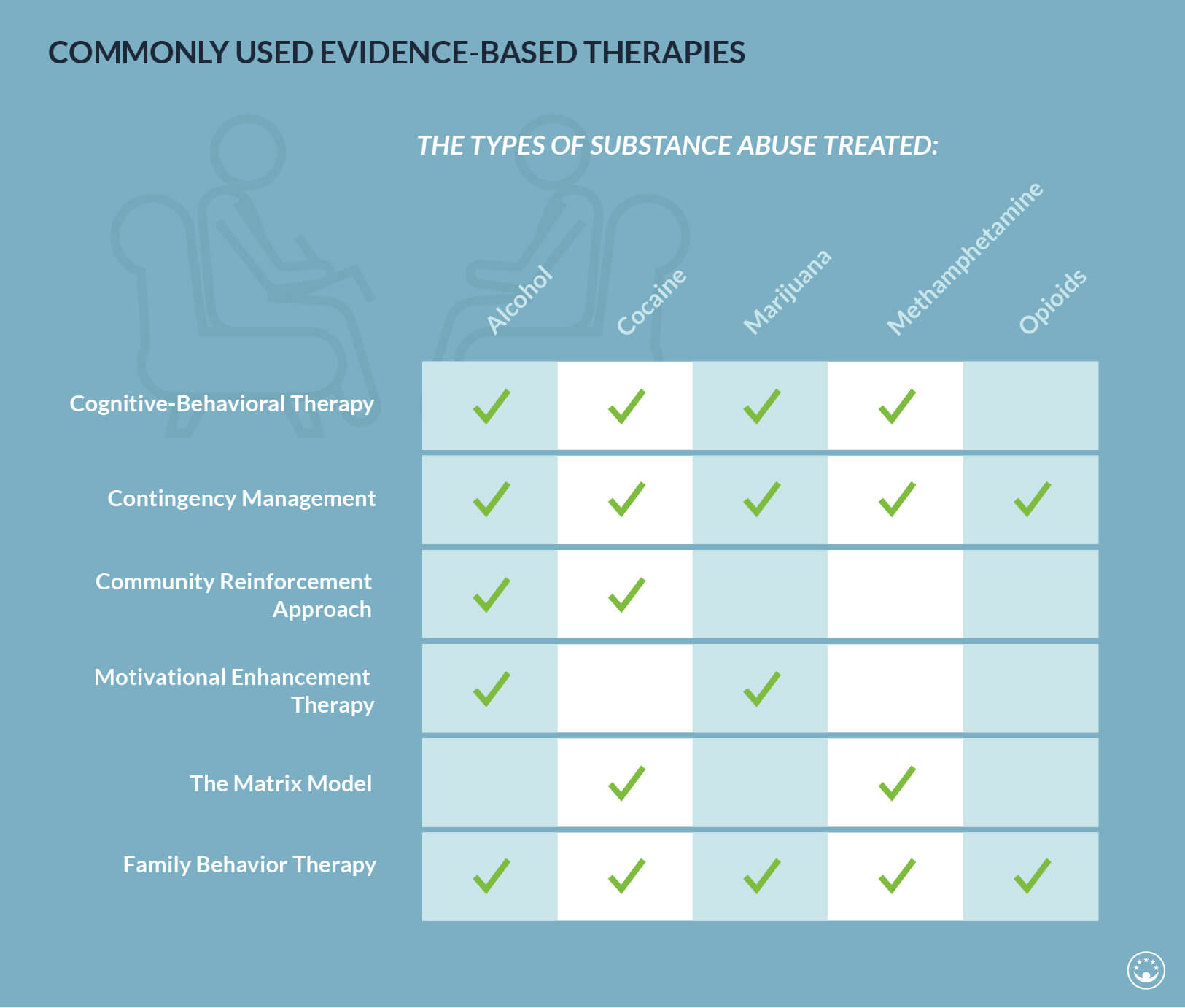
When the benefit (token, benefit, etc.) is under the control of a party external to the client, such as the therapist or treatment provider, customers do not have access to that reward till they perform the contingent reaction. However when it is up to clients to strengthen themselves for actions that are constant with treatment or aftercare goals and incompatible with continuing bothersome compound use, the dispute with completing rewards emerges.
Get This Report about Which Of The Following Is Not Of Proven Effectiveness In The Treatment Of Narcotic Addiction?
In the less regulated environments where nonresidential therapies play out, the customer needs to discover to manage her or his own rewards and responses to the extent possible. B.F. Skinner wrote that the best defect in humanity is the tendency to prefer easy, instant, but potentially harmful repercussions over benefits that take more time and effort to acquire, even if their total advantages to the individual are higher.
Thus treatment planning in the action and maintenance stages of modification introduces contingency management strategies of both types: (a) where an external party controls administration of the reinforcers for new behavior, and (b) where the client applies self-reinforcement. The former may be better in the early phases of action, when clients are more likely to punish themselves for incomplete efforts or outright failures to reach target behaviors.
An example would be the customer who chose to buy herself a brand-new garment after one complete week of sobriety, however then shopped before the goal was achieved, or talked herself out of the Home page purchase even after successfully meeting the goal since she had actually had a hard time so much with cravings throughout the week that she did not feel she should have the brand-new outfit.
For instance, a customer in early remission from an alcohol use condition can not change the truth that lots of supermarket include aisles showing alcohol, which has in the previous offered liquid reinforcement for shopping. However, the customer can discover to modify the experience of grocery shopping in anticipation of the advises and cravings stimulated by a look of that alcohol aisle.

About What Kind Of Treatment Is Recommended For Prescription Drug Addiction
In numerous situations customers are not in a position to completely prevent supermarket (or benefit stores, or dining establishments, or beer commercials on TELEVISION, etc.) and the ensuing cravings. For such clients the treatment plan could include time to talk about alternate analyses of the circumstances that set off urges and cravings, as well as behavioral alternatives the customer has in action to those different analyses.